A shoe horn is a simple tool, so the material matters more than you might think. It decides how the shoe horn feels in your hand, how long it lasts and whether you leave it out or hide it in a drawer.
Plastic
Plastic shoe horns are cheap and light, and they are the ones most people start with. The weak point is the neck, where the handle meets the curved end. Many of our customers tell us their plastic shoe horn cracked there, or simply disappeared into a drawer.
Metal
A metal shoe horn lasts a long time. It is cold to the touch.
Solid wood
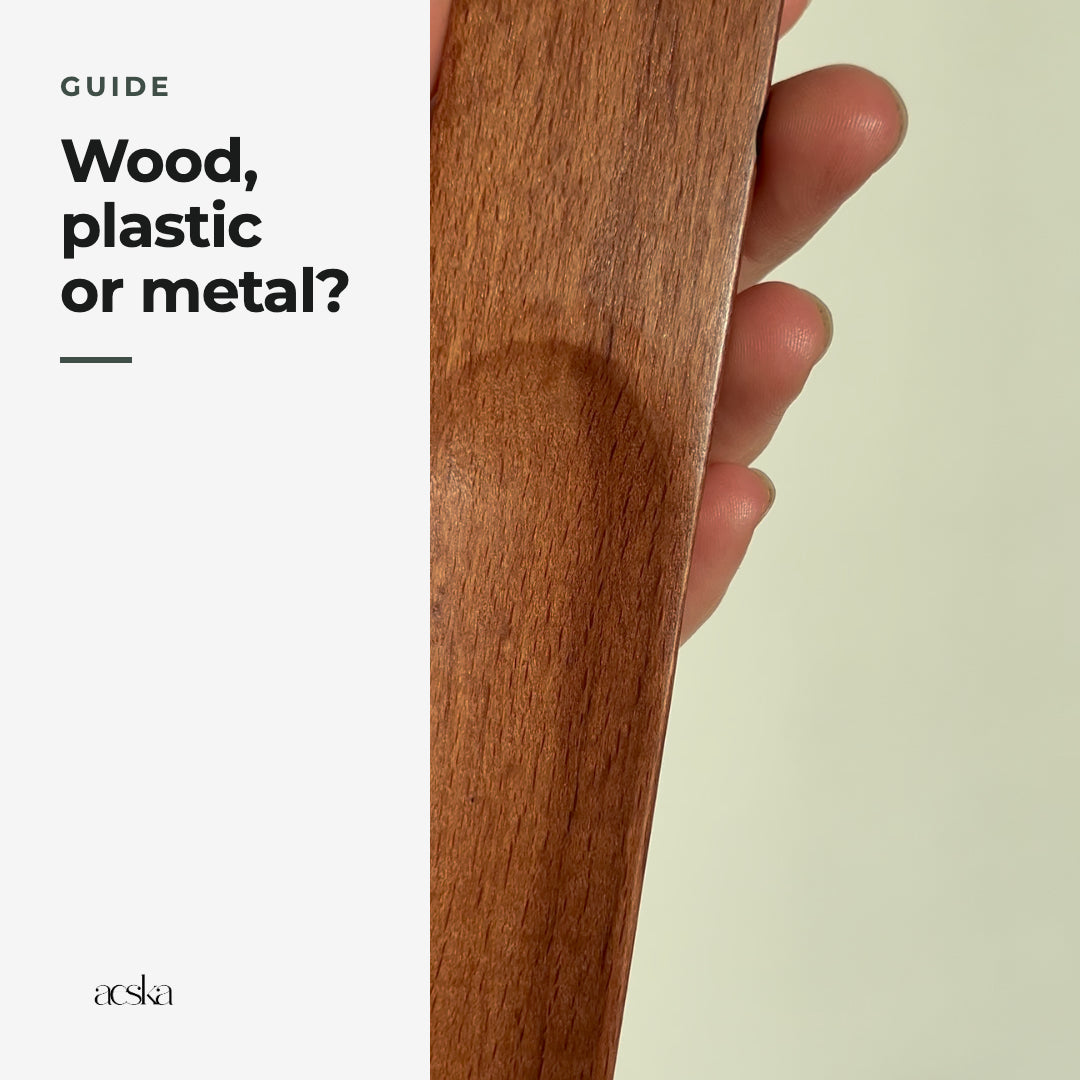
Wood is smooth against a sock and warm in the hand. A shoe horn made from one solid piece is strong enough for daily use. It is also the one material that looks good enough to leave out, which matters more than it sounds: a shoe horn only helps if you can find it.

Four things to look for
- Length. A long shoe horn lets you put your shoes on while you stand. A short one makes you bend or sit.
- A smooth, curved tip. Your heel should glide down it. Rough edges catch on socks.
- A solid material. One piece, with no thin neck that can crack.
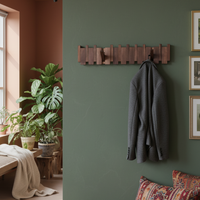
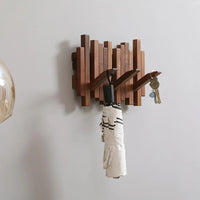
- A place to keep it. A hook or a wall mount by the door, so it is there every time.

What we make
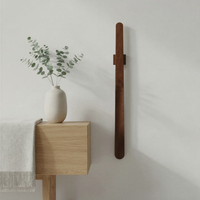
The AESKA Magnetic Shoehorn is 53 cm (21 in) long and made of solid beechwood. It hangs on a small magnetic wall mount that sticks on without drilling, and it comes in Dark Oak, Walnut, Light Oak and Black.

New to shoe horns? Read how to use a long shoe horn, or see how to mount one on the wall without drilling.